EN
EN


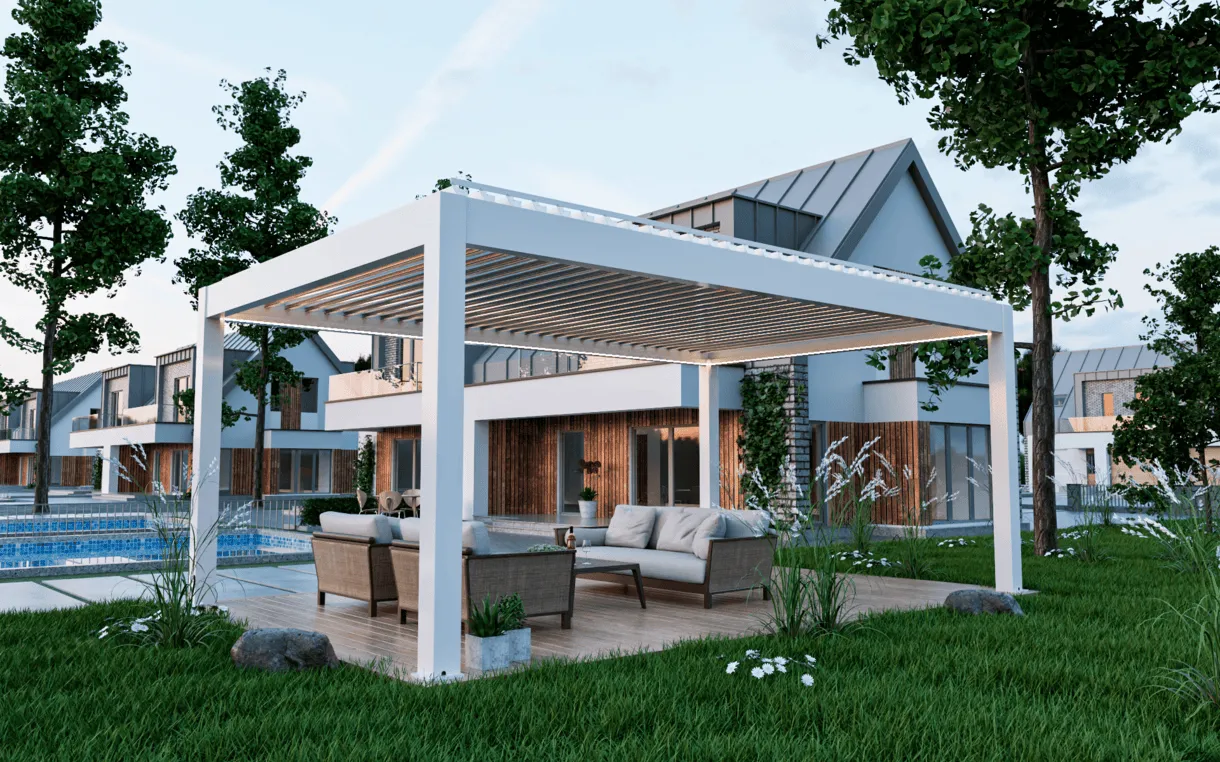
Extending Outdoor Living Year-Round with Bioclimatic Roof Systems
Maximizing Usable Outdoor Space Through Adaptive Design
Bioclimatic roof systems can turn those boring old patios into something totally different throughout the seasons thanks to some clever engineering tricks. These setups often feature cantilevered frames and modular parts that let homeowners arrange their outdoor areas however they want for things like dinner parties, relaxing spots, or even small gatherings without needing lots of support columns everywhere. According to research from last year looking at how people actually use their outdoor spaces, homes with these kinds of roofs get used around 89% of the time all year long, which is way better than the usual 34% seen on regular decks. The best part? Most designs come with retractable screens and sections that can be moved around so folks can adjust their living area based on weather conditions without feeling boxed in by walls or other structures.
Adjustable Louvres for Dynamic Sun and Shade Control
Rotating aluminum louvres (adjustable from 10° to 170°) provide precise solar control, deflecting up to 92% of UV rays when angled at 45° (Solar Shading Institute 2023). This adaptability enables users to:
- Promote cooling cross-breezes in summer with 30% louvre openings
- Achieve full rain protection via overlapping waterproof seals
- Maximize passive solar gain in winter using a 15° south-facing tilt
In a New York City hospitality project, automated louvre scheduling—synced with sun path algorithms—extended daily rooftop usability by an average of 5 hours per year, demonstrating how responsive design enhances functional time outdoors.
Seamless Indoor-Outdoor Connection Across Seasons
Integrated track systems allow bioclimatic roofs to align flush with sliding glass walls, creating effective thermal buffers that reduce HVAC loads by 18—22% (Building Envelope Research 2022). Key features supporting seamless integration include:
| Feature | Winter Benefit | Summer Benefit |
|---|---|---|
| Thermal Break Frames | Prevents cold bridging | Reduces heat conduction |
| Synchronized Operation | Unified climate response | Coordinated ventilation |
Users consistently report maintaining comfortable temperature differentials of just 5°C between indoor and covered outdoor areas during seasonal transitions, enhancing livability and comfort.
Seasonal Temperature Regulation and Thermal Comfort
Passive Heating and Cooling Mechanisms in Bioclimatic Design
Bioclimatic roofs leverage natural thermodynamics to stabilize temperatures without excessive energy use. Adjustable louver angles and high-performance materials—such as aerogel-infused polycarbonate—regulate solar heat gain effectively. In cooler months, strategic orientation captures infrared radiation, reducing HVAC reliance by 19—32% in spring and fall (2023 study).
| Design Feature | Summer Benefit | Winter Benefit |
|---|---|---|
| 45° adjustable louvers | Redirects 90% solar radiation | Captures 85% solar heat gain |
| Phase-change insulation layers | Delays heat transfer by 6h | Maintains heat retention |
These passive strategies form the foundation of energy-efficient climate management.
Optimizing Climate Control from Summer to Winter
Solar tracking systems that work automatically along with thermal inertia adjustments let buildings adapt on the fly to changing environmental conditions around them. The motor driven louvers slowly turn throughout the day to stop that harsh afternoon sunlight from coming through while still letting in enough natural light during the day. This keeps the solar heat gain under control at about 70 watts per square meter during hot summer months. When winter comes around, specially designed joints that create a tight seal combined with insulation in two layers do a great job of keeping indoor temps pretty close to what they should be. Even if it gets as cold as minus ten degrees Celsius outside, the inside stays within three degrees of the desired temperature setting. All these features together make sure people stay comfortable no matter what season it is.
Performance in Extreme Climates: Case Study from Alpine Regions
Researchers conducted a two year study in the Engadin Valley of Switzerland where winters typically drop to around minus fourteen degrees Celsius. They found something interesting about these special bioclimatic roofs. These roofs kept the inside temperature steady at about twenty one degrees Celsius throughout the year. The buildings needed just twenty three kilowatt hours per square meter for extra heating each year. That's actually forty one percent less energy compared to regular roofing systems. Pretty impressive savings! Looking at the construction details, the buildings had frames made from wind rated aluminum alloys. These frames held up against winds blowing as fast as one hundred thirty kilometers per hour. What's even better is they eliminated those pesky thermal bridges that waste so much heat. So after all this testing, it turns out these structures work really well in tough mountain conditions where temperatures can be brutal.
Advanced Weather Protection and Structural Resilience
Managing Rain, Wind, and Snow with Engineered Louver Systems
Louver systems built with precision offer solid defense against rain, strong winds, and even heavy snowfall. According to tests done in wind tunnels, these kinds of roof systems cut down side-to-side wind pressure by around 68% when compared to regular fixed structures, as reported by the European Building Performance Institute back in 2023. The way the blades fit together creates continuous channels that let water drain properly during intense storms. For areas that get lots of snow, special heated aluminum edges stop snow from piling up, while stronger frames can hold snow weights over 75 pounds per square foot. Mountain communities really need this kind of protection. All these features work together so people can keep accessing outdoor spaces without losing sightlines or fresh air circulation.
Real-World Performance of Motorized Roofs in Harsh Conditions
Bioclimatic roofs with motors work pretty well even when conditions get really tough outside. Up north where temperatures can drop to minus 40 degrees Fahrenheit, these systems keep running because they have special heated tracks for gears and components rated for cold weather. Down south near coasts that face hurricanes regularly, builders often go for aluminum parts that resist rust plus galvanized steel frames underneath everything. The numbers are actually impressive too looking at field reports from around 140 different locations across five years, there was roughly 90 percent fewer maintenance issues related to bad weather than what we see with regular pergola structures. And then there's those built-in load sensors which make things safer during big storms by adjusting how stiff the structure becomes automatically, mixing both strong foundational support with smart responses to changing conditions.
Smart Technology Integration for Real-Time Environmental Response
Automation and Sensors for Adaptive Roof Control
Sensors connected through the Internet of Things let bioclimatic roofs tweak their louvres and manage airflow automatically as weather conditions shift throughout the day. A recent look at building automation from 2023 found that when these systems combine light detection, rain sensing, and machine learning tech, they cut down on heating and cooling needs by around 30 something percent during those tricky spring and fall months. The result? Indoor temperatures stay comfortably within the 68 to 76 degree range for most of the time buildings are actually being used in moderate climate zones. And all this happens without anyone needing to touch a thermostat or adjust anything manually, which makes life easier for facility managers while saving money on energy bills too.
Integration with Home Energy Management Systems
Bioclimatic roofs work really well when connected to solar panels and geothermal systems through smart energy controllers. According to a report from the International Energy Agency back in 2022, homes with these integrated systems saw their reliance on the power grid drop by around 41%. That number gets even better when builders incorporate proper thermal mass into the design. In colder months, extra warmth collected from the sun gets redirected to heat household water instead of going to waste. When summer rolls around, automated shading mechanisms kick in to block direct sunlight, which helps keep indoor temperatures comfortable without needing so much air conditioning. These features together create a pretty impressive level of independence from traditional power sources while making all components work better together as a whole system.
Balancing High-Tech Automation with Passive Bioclimatic Principles
European architects are increasingly combining automated systems with basic passive design elements like placing thermal mass strategically around buildings and orienting structures to catch the wind just right. These designs keep buildings functional when the power goes out. Take a recent test project in Scandinavia where they managed to maintain comfortable indoor temps around 61 degrees Fahrenheit for three whole days straight without any electricity at all. They achieved this through smart solar collection techniques and simple ventilation that works purely by gravity. What these examples show is how buildings designed with climate considerations in mind can actually perform surprisingly well during emergencies or unexpected situations.
Energy Efficiency and Sustainable Design Benefits
Harnessing Solar Energy and Strategic Building Orientation
Bioclimatic roofs are pretty good at capturing sunlight because of how they're positioned and those adjustable louvers they have. If these roofs face the right direction for maximum winter sun while keeping out excess summer heat, buildings can save around 40% on their heating and cooling costs according to a study from Building Efficiency Institute back in 2023. The motorized louvers actually move themselves depending on what the weather is doing at any given moment, which helps create these natural temperature swings inside the building. This works really well with green architecture principles, making buildings more comfortable without relying so much on artificial climate control systems.
High-Performance Insulation and Eco-Friendly Materials
Modern bioclimatic systems combine aerogel-infused panels (R-value 15+) with sustainable materials like FSC-certified wood composites and recycled aluminum. This combination delivers:
- 55% reduction in thermal bridging
- 30% lower embodied carbon than standard metal roofs
- Full recyclability at end-of-life
Encapsulated air layers within louver cavities offer triple the thermal resistance of conventional polycarbonate glazing, significantly boosting overall envelope performance.
Proven Energy Savings: Insights from EU Bioclimatic Pilot Projects
A three-year EU study across 62 commercial buildings confirmed consistent efficiency improvements from bioclimatic roofs:
| Climate Zone | Annual HVAC Savings | Carbon Reduction |
|---|---|---|
| Mediterranean | 28% | 19 tCO₂e/yr |
| Continental | 34% | 27 tCO₂e/yr |
| Alpine | 41% | 33 tCO₂e/yr |
These results demonstrate that adaptive roof systems surpass static green roofs in energy retention while meeting rigorous sustainability standards—proving their value across diverse climates and building types.
FAQs
What are bioclimatic roof systems?
Bioclimatic roof systems are advanced roofing solutions designed to enhance outdoor spaces with features like adjustable louvres and retractable parts that adapt to various weather conditions, optimizing usability throughout the year.
How do bioclimatic roofs improve energy efficiency?
They leverage natural thermodynamics and strategic orientation to regulate solar heat gain, significantly reducing HVAC reliance and energy consumption across different seasons.
Can bioclimatic roof systems withstand extreme weather conditions?
Yes, these systems are engineered with features like strong frames and louvre systems that provide resilience against wind, rain, snow, and other harsh weather scenarios, making them suitable for extreme climates.
Are bioclimatic roof systems environmentally friendly?
Bioclimatic roof systems utilize sustainable materials and designs that lower carbon footprints and enhance energy efficiency, thereby promoting eco-friendly building practices.