EN
EN
Bioclimatic Design Principles: Optimizing Climate Control with Adjustable Louvres
Understanding Bioclimatic Pergolas and Their Climate-Responsive Design
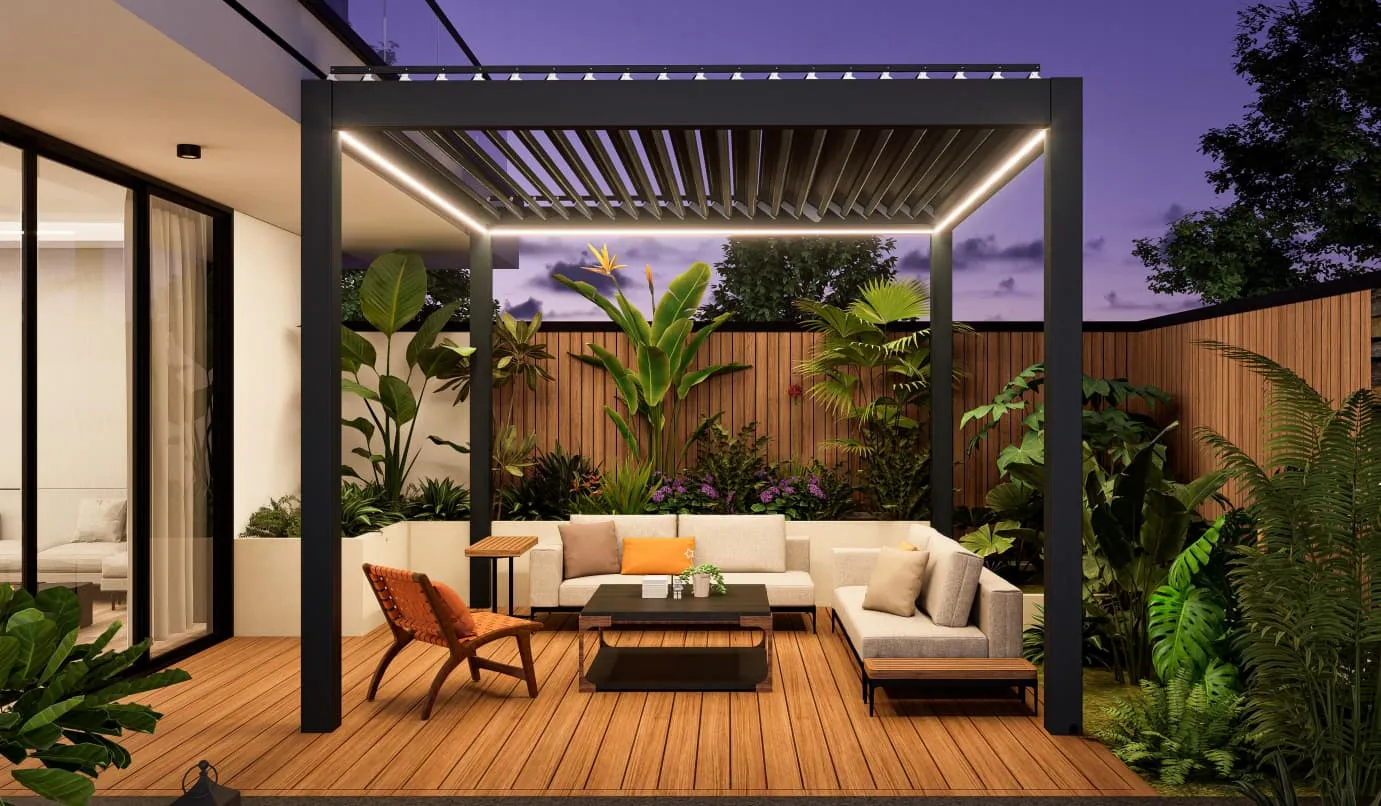
Bioclimatic pergolas adapt to environmental conditions through intelligent engineering, using weather-responsive materials and geometric configurations to maintain thermal comfort. Unlike static shade solutions, they account for seasonal sun paths, prevailing winds, and local precipitation patterns. This dynamic approach enables passive temperature regulation year-round without relying on energy-intensive mechanical systems.
The Role of Adjustable Louvres and Slats for Dynamic Sun and Shade Control
The motorized aluminum louvers at the heart of bioclimatic pergolas let people adjust the slats between completely shut at 0 degrees all the way open to around 165 degrees within about 10 seconds. When positioned just right, they can stop nearly 9 out of 10 units of summer sun heat coming through but still let in that good infrared warmth when it gets cold outside. According to testing results, these systems keep spaces feeling like regular indoors with temps ranging roughly between 21 and 24 Celsius for most daylight hours throughout the day in moderate weather areas. This means folks get comfortable temperatures without needing extra heating or cooling thanks to this smart passive design approach.
Solar Orientation, Material Science, and UV Protection Performance
Getting the best results from these systems really comes down to matching the right materials with how the sun moves across the sky throughout the day. Take anodized aluminum slats for instance they bounce back about 70 percent of those harmful UV rays before any actual heating takes place. And let's not forget about those special self-cleaning coatings either. These little wonders manage to keep more than 90% of their ability to reflect sunlight even after sitting out there in all kinds of weather for five whole years. When it comes to homes, positioning panels on the north side works wonders for spreading light around without causing annoying glare. This creates spaces where people can comfortably spend time outside with lighting conditions ranging from 300 to 500 lux, which turns out to be just right for extended periods outdoors without straining the eyes.
Data: Up to 95% UV Protection with Optimized Louver Angles
Tests out in the field show bioclimatic pergolas can block around 95% of UV rays when set at about a 35 degree louver angle, which is pretty much like wearing SPF 50+ sunscreen. The protection works well during roughly 85% of daylight hours in Mediterranean regions. These areas need some smart adjustments because the sun moves through its path at different angles throughout the year, changing about 57 degrees annually. What makes these systems stand out is how they cut down on direct UV exposure. People who use them face about 40% fewer heat-related health problems than those relying on regular shade structures. That's quite a difference for something that just looks like a nice outdoor space.
Motorized Automation: Smart Control of Louvered Roofs via Apps and Sensors
Motorized Roof Systems and Automated Louver Adjustments
Bioclimatic pergolas come equipped with motor-driven actuators that adjust the louvers just right, making it easy to switch from complete shade to letting fresh air flow through. These structures also have built-in weather sensors that react automatically when there's too much sun, rain coming down, or strong winds blowing around. A recent study on smart home tech from last year showed something interesting: most people (about 8 out of 10) actually like having these automated systems because they maintain comfortable outdoor spaces without anyone needing to fiddle with them manually all day long.
Remote Operation and Integration with Smart Home Platforms
Smartphone apps enable remote control of louver positions, scheduling, and storm-mode activation. Compatibility with Google Assistant, Amazon Alexa, and Apple HomeKit allows voice command operation, addressing a key consumer demand: 68% of homeowners cite unified smart-home control as a decisive factor when upgrading outdoor spaces (Smart Living Report 2024).
Case Study: Automated Bioclimatic Pergolas in Modern Suburban Homes
In a Texas residential development, 92% of households installed sensor-driven bioclimatic pergolas to manage extreme heat fluctuations. Residents reported a 40% reduction in cooling costs and 79% satisfaction with automated climate responses, demonstrating how passive thermal regulation enhances both comfort and energy efficiency.
Sensor-Driven Adaptation: Real-Time Response to Weather Conditions
Weather Sensors for Rain, Wind, and Sunlight Detection
Today's smart pergolas come with all sorts of sensors that keep tabs on what's happening around them weather-wise. The anemometer inside can pick up winds blowing at around 60 miles per hour, while the humidity sensor notices even tiny changes in moisture levels down to about 5%. There's also something there to measure how strong the sun's rays are getting. If it starts raining out of nowhere or gets too hot under the sun, these systems will actually shift those slats in the roof pretty quickly usually within half a minute or so. That means people sitting underneath stay dry and comfortable without having to worry about sudden weather surprises ruining their day outside.
Automated Real-Time Responses to Environmental Changes
When it starts raining, those motorized louvers shut down at around 45 degrees so they can direct all that water runoff properly away from where people are sitting. And when there's strong wind blowing around, the whole system actually locks the louvers flat horizontally which helps cut down on stress for the structure itself. According to some research done last year by folks at the Sustainable Outdoor Design Institute, this kind of automatic response cuts down on maintenance expenses related to bad weather by about 27 percent when compared against regular old pergolas that don't adapt to changing conditions.
Emerging Trend: AI-Driven Predictive Climate Adaptation
The latest generation of these systems uses machine learning to process both past weather patterns and what the forecasts are saying. Take for example those days when we see a good chance of thunderstorms in the late afternoon hours. The smart system will actually start moving those louvers into position well before any raindrops hit the ground, keeping patios and other outside areas dry. Some folks who installed this tech early on have seen their energy bills drop by around 33 percent. That happens because the artificial intelligence works behind the scenes, syncing up how those louvers open and close with the building's existing solar shading and heating setup. Makes sense really - nobody wants to waste money on climate control when nature is doing most of the work for them already.
Sustainable Innovation: Energy Efficiency and Solar-Powered Integration
Bioclimatic pergolas are evolving into sustainable energy hubs by combining passive climate control with renewable power generation and efficient auxiliary systems.
Energy-efficient LED lighting and integrated heating solutions
Integrated LED lighting consumes 85% less energy than conventional outdoor fixtures and offers adjustable color temperatures for ambiance tuning. Radiant heating elements target specific zones, reducing energy waste by up to 30% compared to whole-area patio heaters.
Smart ambiance control through lighting and climate features
Occupancy sensors and weather-responsive logic automatically adjust lighting brightness and heating output based on usage and ambient conditions. These settings sync with sunrise and sunset cycles for optimal efficiency, while voice commands allow intuitive, hands-free control during social gatherings.
Solar-powered bioclimatic pergolas for off-grid sustainability
Photovoltaic panels embedded in louver blades and support structures generate 1.2—1.5 kWh per m² daily, powering all integrated functions—including motors, sensors, and lighting—without grid dependence. These dual-purpose surfaces retain full structural integrity and weather resistance.
Data: Solar-integrated models reduce energy consumption by up to 40%
A 2025 analysis of solar-ready bioclimatic pergolas revealed annual reductions in grid electricity use between 37% and 42%. Models equipped with battery storage extended evening functionality by 65% compared to non-solar versions, enhancing usability and sustainability.
Seamless Smart Home Integration: Voice Control and IoT-Enabled Outdoor Living
Modern bioclimatic pergolas enhance outdoor living by integrating directly with smart home ecosystems, communicating seamlessly with platforms like Google Home and Apple HomeKit to centralize control of louver angles, lighting, and climate settings.
Integration with Google Home, Apple HomeKit, and Other Smart Ecosystems
Leading bioclimatic systems are compatible with 85% of major smart home platforms, enabling users to include pergola operations within broader automation routines. A single trigger—such as a sunset alert—can simultaneously close louvers, dim lights, and activate zone heating, delivering a cohesive indoor-outdoor experience.
Voice Commands and Mobile App Control for Hands-Free Operation
Voice-controlled interactions account for 62% of user engagements, with most leveraging Alexa or Siri for instant adjustments. Mobile apps provide advanced customization, including preset scenes for entertainment (open louvers, soft lighting) or storm readiness (fully closed, drainage engaged).
Strategy: Creating a Unified Smart Outdoor Living Experience via IoT
Manufacturers increasingly adopt IoT protocols like Zigbee and Matter to ensure cross-device compatibility. This interoperability allows pergolas to respond in concert with indoor systems—for example, automatically shading patios as indoor thermostats increase cooling—resulting in up to 34% lower total household energy consumption (Smart Home Alliance 2023).
FAQ
What are Bioclimatic Pergolas?
Bioclimatic pergolas are outdoor structures designed to adapt to environmental conditions. They use smart materials and designs to regulate temperature passively, reducing reliance on mechanical systems.
How do adjustable louvers benefit bioclimatic pergolas?
Adjustable louvers allow for precise control of sunlight and shade, optimizing thermal comfort. They can be motorized for quick adjustments, enabling effective sun protection and heat retention.
Can bioclimatic pergolas integrate with smart home systems?
Yes, modern bioclimatic pergolas can connect with smart home platforms such as Google Home and Apple HomeKit, allowing for centralized control through voice commands and mobile apps.
Table of Contents
- Bioclimatic Design Principles: Optimizing Climate Control with Adjustable Louvres
- Motorized Automation: Smart Control of Louvered Roofs via Apps and Sensors
- Sensor-Driven Adaptation: Real-Time Response to Weather Conditions
- Sustainable Innovation: Energy Efficiency and Solar-Powered Integration
- Seamless Smart Home Integration: Voice Control and IoT-Enabled Outdoor Living
- FAQ