EN
EN

Modern Minimalist Pergolas: Sleek Design and Low-Maintenance Materials
The Rise of Minimalist Outdoor Architecture in Urban Homes
More city dwellers are going for those sleek, no-frills pergolas these days because they want to make the most of their small patios without messing up the overall look. These clean designs cut out all the fancy decorations and stick to sharp lines and shapes that actually match up well with contemporary house fronts. We're seeing this move towards practical beauty everywhere really. A recent survey from last year showed that nearly four out of five architects have started putting simplicity and getting things done first when designing outdoor spaces for homes in urban areas.
Material Options for Pergolas (Wood, Metal, Steel): Clean Lines and Durability
Three materials dominate modern minimalist pergolas:
- Aluminum: Rust-resistant and lightweight, ideal for adjustable louvered roofs
- Powder-coated steel: Offers structural rigidity for cantilevered designs with a 20+ year lifespan
- Composite wood alternatives: Mimic natural grain without seasonal warping or staining
Steel-and-aluminum hybrid frames now lead the market, combining sleek profiles with wind resistance up to 90 mph (structural engineering standards, 2024).
Integrating Modern Pergola Designs with Clean Landscaping
Designers pair minimalist pergolas with monochromatic hardscaping—think concrete pavers or large-format porcelain tiles. Strategic evergreen plantings (boxwood hedges, dwarf olive trees) maintain year-round cohesion without overshadowing the structure. These pairings increase perceived outdoor space by 34% in urban settings.
Luxury Poolside and Outdoor Living Pergola Setups
Blending Elegance and Function in Poolside Pergola Environments
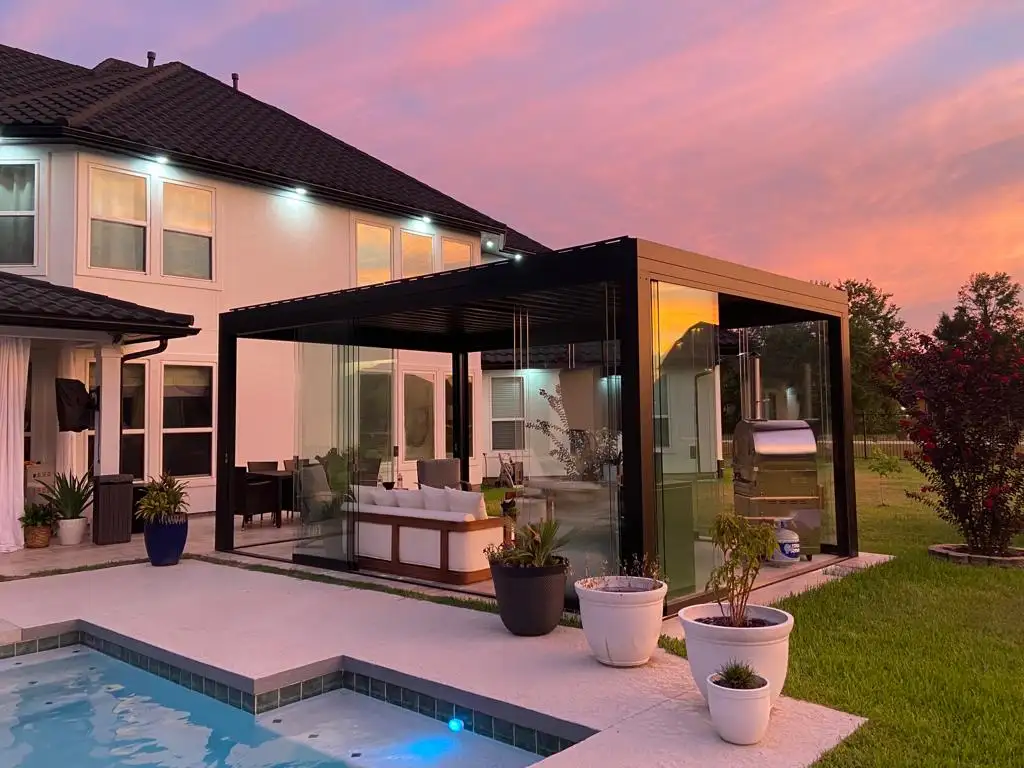
Modern outdoor living demands structures that harmonize aesthetics with practicality. Luxury poolside pergolas serve as both architectural focal points and functional shelters, often incorporating curved beams or geometric patterns that mirror water features while providing 30–70% shade coverage (Outdoor Living Trends Report 2024).
Water-Resistant Materials and Ventilation Strategies for Humid Climates
Powder-coated aluminum and thermally modified cedar are top choices due to their corrosion resistance and 15–20 year lifespans. Louvered roof systems with 180-degree adjustable blades allow precise airflow control—critical in tropical climates where humidity averages 70–80%. Cross-ventilation designs reduce heat accumulation by 18°F compared to solid-roof pergolas.
Spa-Like Retreats Under Louvered Roof Systems Near Swimming Pools
Twelve premium louver models now integrate rainwater channels and UV-resistant polycarbonate panels, creating dry zones perfect for hot tub surrounds or outdoor massage areas. These systems enable on-demand transitions—open for stargazing during night swims, closed for steam-room effects during cool mornings.
Outdoor Living Rooms Under Pergolas With Fire Pits and Seating
Seventy-two percent of luxury pergolas now include built-in amenities:
| Feature | Prevalence | Key Benefit |
|---|---|---|
| Linear gas fire pits | 48% | Extends seasonal use by 3 months |
| Weatherproof sectional seating | 62% | Accommodates 6–8 guests comfortably |
| Integrated sound systems | 34% | 360° audio coverage up to 500 sq ft |
Furniture Layout Strategies for Comfort and Flow in Covered Spaces
The "zone method" proves most effective for pergolas spanning 400+ sq ft:
- Dining areas: 42" clearance around tables for chair movement
- Lounge spaces: Cluster seating within 7' radius of heat sources
- Traffic lanes: Maintain 36" wide pathways between functional zones
Dual-tone cushion fabrics (light tops/dark bottoms) reduce visible wear by 60% in high-use areas.
Rustic Wooden Pergolas and Natural Material Integration
Timeless Charm of Wooden and Rustic Pergola Styles
Wooden pergolas add that special something to outdoor areas because of the way wood grains show through and those warm earth colors. Most folks go for cedar or redwood since they don't rot as easily and just look right in garden settings or anywhere nature is nearby. If we leave them alone without any treatments, they tend to turn into this beautiful grayish color after years outside, which actually makes them look even more charmingly old fashioned. The rough looking beams and carefully made joints really highlight the craftsmanship involved, so these structures work great in places like small country gardens or cabins tucked away in the mountains where people want that handmade feel.
Sustainability Considerations in Cedar and Redwood Sourcing
Choosing materials responsibly helps align projects with environmental values that many clients now expect. According to recent data from the American Society of Landscape Architects, around 78% of professionals in the field are specifying FSC certified wood for their outdoor designs. When looking at actual materials, cedar and redwood remain popular choices because they have relatively low environmental footprints. These trees grow pretty fast compared to other hardwoods and don't need much chemical treatment during processing, unlike some composite alternatives. There's also been a noticeable rise in reclaimed barn wood usage across the country. This not only helps cut down on new tree harvesting but gives landscapes that nice weathered look right from the start. For anyone working on green projects, it makes sense to work with suppliers who can show proper documentation about their sourcing practices through recognized certification programs.
Preservation Techniques to Extend Lifespan in Varying Climates
Protecting wooden pergolas from moisture and UV damage requires strategic maintenance:
- Coastal/Humid Areas: Annual water-repellent stains prevent salt corrosion and mold
- Arid Regions: Tung oil treatments minimize wood splitting in extreme heat
- Snow-Prone Zones: Pressure-treated footings prevent frost heave damage
New polymer-infused sealants last 3–5 years between applications, significantly reducing upkeep compared to traditional varnishes. Proper eave spacing (12–16 inches) and elevated foundations enhance durability by promoting airflow and drainage.
Smart Shade and Lighting Solutions for Outdoor Patio Pergolas
Adjustable Shade Solutions: Motorized Louvers, Retractable Roofs, and Solar Screens
These days, many modern pergolas come equipped with motorized louvers that sense when the sun gets too strong or when rain is coming, then they adjust themselves automatically. They block almost all those harmful UV rays but still let fresh air circulate through. Some folks install retractable roofs using tough marine fabric that gives instant shade whenever needed. We've seen cases where these systems cut down cooling bills by around 25 percent according to ShadePro's latest report from last year. For areas that get blasted by sunlight all day long, there are also solar screens built right into the pergola frame itself. These screens keep the heat out while still letting people see what's going on outside, which makes them perfect for backyard spaces that need protection from harsh afternoon sun.
Manual vs. Automated Shading Mechanisms: A Comparative Analysis
| Feature | Manual Systems | Automated Systems |
|---|---|---|
| Cost | $1,200–$3,500 | $4,000–$12,000+ |
| Response Time | 3–5 minutes | 10–30 seconds |
| Weather Adaptation | None | Rain/wind sensors |
| Manual crank mechanisms suit budget-conscious homeowners, while automated systems appeal to those prioritizing convenience and smart home integration. |
Designing Outdoor Dining Under Pergolas with Ambient Lighting
A 2023 NKBA survey found 62% of outdoor kitchens incorporate pergolas with layered lighting for evening entertainment. Dimmable pendant lights hung at 7'-8' heights eliminate glare on dining surfaces, while recessed LED strips in pergola beams create subtle pathway illumination.
Pergola Lighting Ideas (String Lights, Pendants): Layering Illumination for Mood
- Task Lighting: Directional spotlights (300–500 lumens) above grilling stations
- Ambient: Edison bulb string lights spaced 12–18" apart
- Accent: Uplighting on vertical posts or climbing plants
LED Integration and Energy-Efficient Pendant Light Placements
Low-voltage LED systems now dominate pergola designs, with modular fixtures lasting 50,000+ hours. Energy Star-certified pendant lights consume 75% less power than incandescent alternatives while providing 2700K warm white lighting—optimal for creating inviting outdoor spaces. Cross-ventilated designs prevent heat buildup around fixtures in enclosed setups.
Privacy Features and Green Integration in Pergola Design
Patio Pergolas with Curtains for Privacy and Shade: Fabric Types and Durability
Weather-resistant curtains transform pergolas into adaptable retreats, offering adjustable privacy and UV protection. Fabrics like solution-dyed acrylic or UV-resistant polyester withstand harsh sunlight while maintaining color vibrancy for 5–7 years (Outdoor Textile Report 2023). In humid climates, mildew-resistant materials with tight weaves prevent moisture retention, balancing functionality with sleek design.
Customization Options: Slats, Partial Walls, and Modular Enclosures
Adjustable slat systems allow precise light control, while partial walls crafted from cedar or composite materials create semi-private zones without compromising airflow. Modular enclosures, such as removable lattice panels, enable seasonal reconfiguration—ideal for transitioning between open-air gatherings and intimate settings.
Pergolas Enhanced with Climbing Plants and Garden Integration
Climbing vines like jasmine or clematis soften structural lines and provide natural shade, reducing ambient temperatures by up to 15°F in peak summer. Fast-growing species like Boston ivy achieve full coverage in 2–3 seasons but require trellis systems rated for 50+ lbs to support mature growth.
Balancing Lush Greenery with Structural Integrity and Maintenance
While greenery enhances aesthetics, unchecked plant growth risks wood rot or metal corrosion. Annual inspections of load-bearing beams and waterproof sealant reapplication every 3 years prevent degradation. Opt for lightweight aluminum frames when pairing pergolas with aggressive climbers like wisteria.
FAQ
-
What is the main purpose of a minimalist pergola?
A minimalist pergola aims to maximize outdoor space while maintaining a sleek, contemporary design that complements modern urban homes.
-
Which materials are most suitable for modern pergolas?
Aluminum, powder-coated steel, and composite wood alternatives are ideal for modern pergolas due to their durability and clean lines.
-
How do minimalist pergolas integrate with landscaping?
They pair well with monochromatic hardscaping and evergreen plantings, enhancing the overall outdoor aesthetic without overshadowing the structure.
-
What are the advantages of automated shading mechanisms in pergolas?
Automated mechanisms provide quick response times and adapt to weather conditions, offering convenience and energy efficiency.
-
How can greenery be balanced with pergola maintenance?
Regular inspections and maintenance ensure the structure remains intact while supporting the growth of climbing plants without compromising integrity.
Table of Contents
- Modern Minimalist Pergolas: Sleek Design and Low-Maintenance Materials
-
Luxury Poolside and Outdoor Living Pergola Setups
- Blending Elegance and Function in Poolside Pergola Environments
- Water-Resistant Materials and Ventilation Strategies for Humid Climates
- Spa-Like Retreats Under Louvered Roof Systems Near Swimming Pools
- Outdoor Living Rooms Under Pergolas With Fire Pits and Seating
- Furniture Layout Strategies for Comfort and Flow in Covered Spaces
- Rustic Wooden Pergolas and Natural Material Integration
-
Smart Shade and Lighting Solutions for Outdoor Patio Pergolas
- Adjustable Shade Solutions: Motorized Louvers, Retractable Roofs, and Solar Screens
- Manual vs. Automated Shading Mechanisms: A Comparative Analysis
- Designing Outdoor Dining Under Pergolas with Ambient Lighting
- Pergola Lighting Ideas (String Lights, Pendants): Layering Illumination for Mood
- LED Integration and Energy-Efficient Pendant Light Placements
- Privacy Features and Green Integration in Pergola Design