EN
EN
Understanding the Average Cost and Market Factors for Bioclimatic Pergolas
Key Drivers Behind the Bioclimatic Pergola Price Range
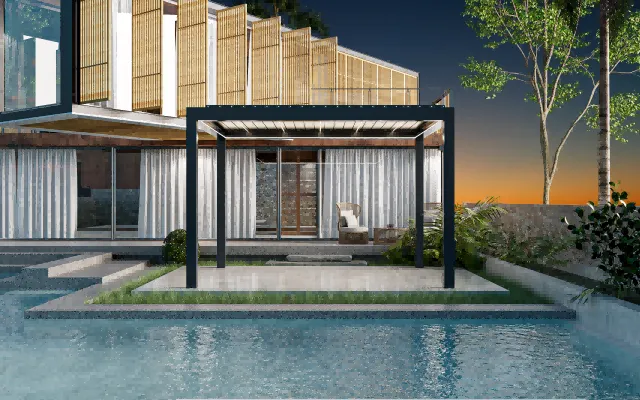
The price tag for bioclimatic pergolas typically falls somewhere between $800 and $1,500 per square meter when fully installed. What affects this cost? Well, it depends on how good the materials are, how complicated the automated features get, and what kind of weather adjustments are needed. Aluminum frames tend to last longer than steel ones, which is why they come at a higher price point, usually around 40 to 60 percent more expensive. If someone wants motorized louvers that can adjust anywhere from minus 60 degrees to plus 60 degrees, expect to pay an extra $2,000 to $4,000 for that convenience. Smart sensors that detect rain, wind conditions, and light levels will eat into about 18 to 25 percent of the total budget for top-end projects. For those building near the coast, there's an added expense because special coatings against corrosion push costs up by roughly 22%. And don't forget about cities where workers charge more due to all the paperwork involved with permits plus difficulties getting equipment onto tight sites, adding another 15 to 20% to labor expenses.
Regional Price Variations and Climate-Based Demand Trends
North America and Europe represent 65% of global demand (2023 data), with coastal zones paying 25% more for wind-resistant designs. Mediterranean projects typically include UV-blocking louvers ($120–$180/m²), whereas Northern European installations invest in heated gutter systems ($1,500–$2,800). In contrast, Asia-Pacific markets average 30% lower costs but experience 12–18-month lead times for imported automation components.
Impact of Smart Technology on Upfront Investment
| Feature | Cost Range | Energy Savings |
|---|---|---|
| Motorized Louvers | $1,200–$2,500 | 15–20% |
| Climate Sensors | $400–$900 | 10–18% |
| App-Controlled Lighting | $750–$1,400 | 8–12% |
Smart technology increases initial investment by $3,000–$8,000 but delivers 18–27% annual energy savings through adaptive shading, improving long-term value.
Benchmarking Realistic Budgets by Location and Use Case
- Residential (20m²): $24,000–$36,000 (urban), $19,000–$28,000 (suburban)
- Commercial (50m²): $55,000–$85,000 (coastal), $45,000–$70,000 (inland)
Coastal commercial projects require an additional 10–15% allocation for wind certification and marine-grade alloys to ensure structural resilience.
Rising Demand and Its Influence on Supplier Pricing
With a market CAGR of 9.2% (2023–2026), suppliers have adopted tiered pricing:
- Entry-level kits ($12,000–$18,000 for 15m²)
- Mid-tier models with basic automation ($28,000–$42,000)
- Premium packages featuring 10-year smart system warranties ($65,000+)
High-demand regions see 5–8% annual price increases, while bulk buyers receive 7–12% discounts on orders of three or more units.
Core Cost Factors: Size, Materials, and Key Components
How Size Scales the Total Investment in a Bioclimatic Pergola
Costs rise non-linearly with size due to increased structural demands. Installations under 15 sq.m. start around $7,500, while those exceeding 30 sq.m. can exceed $30,000 (2024 Industry Report). Larger structures require reinforced foundations, extra louver blades, and high-capacity motors to maintain consistent operation across the span.
Why Aluminum Is the Preferred Material for Body and Lamellas
Aluminum gets chosen a lot because it's strong yet light weight stuff, actually about 30 percent lighter than regular steel. Plus it doesn't corrode as easily either. Some research from last year showed that even after sitting out there for 15 years along the coast where salt air does its damage, aluminum still holds onto around 92% of its original strength. That beats wood hands down, three times better basically. Sure, aluminum starts off costing maybe 20 to 40 percent more than that powder coated steel option. But here's the thing nobody mentions much these days: no need to repaint it ever again. And when we look at total costs over time, aluminum saves companies roughly twelve hundred dollars every ten years compared to other materials.
Louver Design and Adjustability: Balancing Function and Cost
Manual louver systems cost $45–$75 per blade; motorized versions range from $120–$200 due to precision engineering. Automated slats with tilt sensors reduce snow-related repairs by 68% (Cold Climate Design Council 2022), justifying the upgrade in colder climates. In dry regions, fixed-angle louvers can save $3,000–$5,000 without sacrificing performance.
Motors, Sensors, and Automation Systems: Hidden Cost Drivers
Smart integration adds $4,100–$8,300 to total costs but enables 23% energy savings in Mediterranean climates via automated shade control (Smart Home Integration Review 2024). Proprietary motors make up 35% of premium installations’ expenses, though open-source alternatives now reduce this by 18% without compromising response speed to rainfall.
Optional Features and Smart Integration Trade-Offs
Evaluating the ROI of Advanced Sensors and Environmental Controls
According to Building Efficiency Journal (2023), buildings equipped with integrated climate sensors can save anywhere between 18 to 25 percent on yearly energy bills when compared against traditional manual systems. Installing humidity control systems along with those smart solar responsive louvers might cost an extra $1,200 to $4,500 initially, but these investments generally recoup themselves within four to seven years thanks to lower heating and cooling expenses. When choosing which sensors work best for different areas, location matters a lot. For instance, homes near the coast see significant benefits from corrosion resistant rain detectors since salt air eats away at equipment so quickly. Meanwhile folks living in dry regions find that optimizing for solar heat gain makes all the difference in keeping indoor temperatures comfortable without breaking the bank on AC.
Proprietary vs. Open-Source Software: Long-Term Implications
| Factor | Proprietary Systems | Open-Source Alternatives |
|---|---|---|
| Initial Cost | 15–30% higher | Lower upfront, higher labor |
| Update Flexibility | Vendor-dependent schedules | User-controlled upgrades |
| Integration Potential | Limited to brand ecosystems | Cross-platform compatibility |
Proprietary systems often include coverage for weather-related malfunctions, while open-source options avoid vendor lock-in but may require technical expertise for maintenance.
Design Aesthetics and Customization: When to Invest More
Going for brushed aluminum finishes will definitely add to the bottom line, usually pushing costs up around 10 to 15 percent. But according to the National Realtors Association from 2023, these finishes can actually make properties sell for about 3.5% more down the road. When it comes to customization, real value shows up when work matches old school architecture standards, plays nice with current smart home systems, or ticks off those HOA boxes that so many neighborhoods have nowadays. For regular day to day projects though, powder coated steel stands up just fine against wear and tear while costing roughly 40% less than those fancy architectural grade alternatives on the market.
Energy Efficiency and Maintenance Features Worth the Premium
Self-cleaning louvers eliminate $200–$600/year in cleaning fees, while thermal-break aluminum frames reduce heat transfer by 58% versus standard profiles—essential for year-round comfort. These features enhance efficiency and minimize upkeep, especially in extreme climates.
Maximizing Value and Return on Investment
Prioritizing Features Based on Climate and Usage Patterns
Maximize ROI by tailoring features to local conditions. Rain-prone areas benefit from integrated drainage and rust-resistant aluminum frames that prevent water pooling. Arid regions should prioritize UV-stabilized louvers blocking 99% of harmful rays. Coastal installations justify a 15–20% material cost increase for marine-grade protection, which extends lifespan by 8–10 years.
Balancing Aesthetics and Functionality Within Budget Constraints
Aluminum coated with woodgrain powder finish looks just like real wood but saves around 30 percent over time compared to actual timber products. Motorized louvers do come with a price tag that's somewhere between $1,200 and $2,800 higher than their manual counterparts, but here's the catch – these automated systems can cut down on heating and cooling expenses by roughly 25% each year according to some recent research from climate control experts in 2023. For folks living in cities where noise is always an issue, those clear acrylic panels designed to absorb sound work almost as well as double glazed windows while costing only about half what glass would run for every square foot installed.
Total Cost of Ownership: Maintenance, Durability, and Energy Savings
Most automated systems equipped with humidity sensors tend to pay for themselves within around four to seven years thanks to reduced expenses on heating and air conditioning. The self lubricating louvers are another smart investment since they cut out those yearly maintenance fees that usually run between one hundred fifty to three hundred dollars. When it comes to solar integrated louvers, these actually produce somewhere between eighteen to twenty two kilowatt hours per square meter each year. That kind of output covers roughly sixty percent of what most patios need for lighting at night. Homeowners looking to get the best bang for their buck should focus on long lasting materials, efficient automated features, and designs that require minimal upkeep throughout the life of the pergola which generally lasts anywhere from twenty to twenty five years before needing replacement.
Choosing the Right Installer and Financing Strategy
How to Evaluate Installer Expertise and Certification
Choose installers certified under international standards such as ISO 9001, with documented experience in bioclimatic pergola projects. According to a 2023 industry survey, certified professionals complete installations 23% faster and reduce post-installation maintenance costs by up to 18%. Verify training through manufacturer-approved programs and review portfolios for climate-specific examples matching your environment.
Transparent Installation Timelines and Labor Cost Expectations
Installation takes 7–12 days for automated systems, longer than manual setups due to integration complexity. Labor accounts for 25–35% of total costs, with Northern European technicians charging $95–$120/hour compared to $65–$85/hour in Mediterranean regions. Always request itemized quotes separating hardware, software configuration, and post-installation testing.
Financing Options: Leasing, Loans, and Bundled Packages
Leasing programs can reduce upfront costs by 40–60%, making high-end systems more accessible. Manufacturer-backed loans often feature preferential rates for energy-efficient models. In Europe, 74% of buyers opt for bundled packages that include installation, smart controls, and 10-year maintenance plans—offering predictable long-term budgeting and enhanced service coverage.
FAQ Section
What are bioclimatic pergolas?
Bioclimatic pergolas are structures designed to adjust to environmental conditions, optimizing comfort and energy efficiency through features like motorized louvers and smart sensors.
How much does a bioclimatic pergola cost on average?
The average cost ranges from $800 to $1,500 per square meter, varying based on materials, location, and additional smart features.
What factors influence the cost of bioclimatic pergolas?
Key cost factors include the quality of materials, the complexity of automation, climate adaptation needs, and additional enhancements like UV-blocking louvers or smart sensors.
Are bioclimatic pergolas worth the investment?
Yes, investing in bioclimatic pergolas offers long-term energy savings, improved environmental comfort, and durability, particularly when tailored to local climate conditions.
What are the benefits of using smart technology in pergolas?
Smart technology allows for adaptive shading and climate control, leading to significant energy savings and enhanced living comfort.