EN
EN
Why Aluminum Frame Pergolas Are Transforming Modern Outdoor Spaces
The Growing Trend of Aluminum Pergolas in Contemporary Landscaping
Landscape architects and homeowners are increasingly choosing aluminum frame pergolas, with installations rising 35% year-over-year (Landscape Architecture Network 2023). These modern structures align with minimalist outdoor aesthetics while offering superior weather resistance. This shift reflects a growing preference for low-maintenance, eco-conscious materials that maintain their appearance across seasons.
Advantages Over Traditional Materials: Durability, Maintenance, and Design
Aluminum pergolas outperform wood in three key areas:
- Durability: Resistant to warping and cracking under extreme conditions, including 120°F heat and 90 mph winds
- Maintenance: Require 90% less upkeep than wood, eliminating the need for annual sealing or painting
- Design flexibility: Enable cantilevered roofs and spans up to 18 feet without support
According to the 2024 Outdoor Living Materials Report, aluminum structures retain 98% of their structural integrity after 10 years—triple that of wood.
Real-World Appeal: How Homeowners Are Upgrading Patios and Gardens
Across the country, from sunny California coasts all the way down to Florida's humid climate, nearly three out of every four renovation projects these days are going with aluminum pergolas as their main outdoor feature according to the Home Improvement Trends report released last year. What makes these structures so popular? They just work really well with whatever else is happening outside whether it's patios, garden walls, those fancy retractable shade systems, or even full blown outdoor kitchen setups. When looking at return on investment numbers, aluminum framed pergolas actually give homeowners around triple what they'd get from wooden alternatives over time. That kind of performance makes sense why more people are choosing metal over traditional materials for their backyard spaces.
Unmatched Durability and Weather Resistance of Aluminum Frame Pergolas
Performance in Extreme Climates: Heat, Rain, and Coastal Environments
Aluminum pergolas really hold up well when conditions get tough, something traditional materials just can't match. Take those hot desert areas where temps regularly hit over 120 degrees Fahrenheit. The surfaces of these aluminum structures don't fade from sun exposure nearly as much as wood does according to Greenawn Group research from last year showing about 74% less fading. Coastal properties face another challenge altogether. The natural protective coating on aluminum stands up pretty good against salt spray too, so there's little worry about rust forming even when humidity levels climb past 80%. And during those big storms? Well designed gutter systems combined with proper slope angles actually move away around half again as much water compared to regular untreated cedar. This means less standing water problems and less stress on the overall structure over time.
Corrosion-Resistant Properties and Long-Term Structural Integrity
When aluminum comes into contact with oxygen, it naturally creates what's called a protective oxide layer through a process we know as passivation. According to recent studies from the Aluminum Association (2024), this natural defense mechanism cuts down on rust problems by around 92%. For those looking at high quality options, many premium products come with special powder coatings that have been put through rigorous testing. These coatings can last for well over 1,500 hours when exposed to harsh salt environments, meeting industry standards like ASTM B117. The combination of these two protective features means that structural beams maintain nearly all their original strength even after 15 years of service. They can still handle substantial snow weight too, up to about 45 pounds per square foot in regions where heavy winter conditions are common.
Average 25-Year Lifespan with Minimal Upkeep Required
Wood pergolas usually need sanding and sealing every couple of years, but aluminum frames just require a quick annual rinse. According to a recent 2023 survey, people who own aluminum pergolas end up spending about 94% less on maintenance costs over ten years when compared to those with wooden structures. Since there's no worry about rotting wood, termites eating through supports, or panels warping from moisture, companies such as Sunjoy back their products with impressive 25 year limited warranties. That's way beyond what most pressure treated pine pergolas can promise, which typically come with around 8 to 12 years coverage at best. The Ponemon Institute actually calculated that aluminum pergolas have roughly 740% fewer chances of needing replacement throughout their lifetime compared to traditional wooden options.
Design Flexibility and Customization Options for Every Garden Style
Sleek minimalist to luxury designs: Matching your home's architecture
Aluminum's malleability allows it to complement any architectural style—from sleek contemporary homes to traditional cottages. It supports clean lines for minimalist spaces or intricate detailing for classical revivals. Modern designs often mirror popular facade materials such as steel and glass through curved beams and tapered columns.
Available color finishes and structural configurations
Available in over 30 powder-coated finishes—including matte slate, bronze metallic, and crisp white—aluminum pergolas blend effortlessly with existing outdoor decor. Structural options include:
- Attached models extending from rooflines
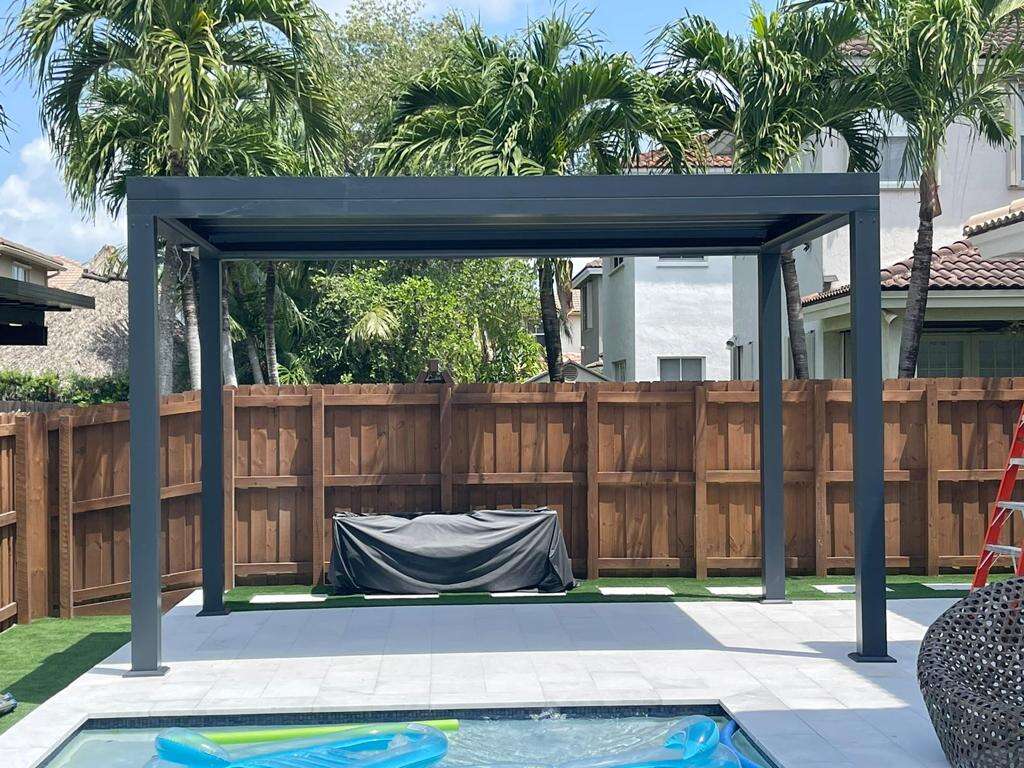
- Freestanding units ideal for poolside use
- Angular or rounded beam layouts This versatility enables 78% of homeowners to match their design inspiration exactly (2023 landscape design surveys).
Custom integrations: Lighting, louvered roofs, and smart features
Today's aluminum pergolas go beyond shade with advanced integrations:
- Motorized louvered roofs adjust from 0° to 135°, responding to weather sensors
- RGBW LED strips embedded in beams create customizable lighting scenes
- Smart hubs enable voice-controlled operation of heaters, fans, and speakers A 2024 outdoor living report shows 62% of upgraded patios now include at least two automated features, emphasizing multi-season usability.
Enhancing Comfort and Functionality with Smart Pergola Add-Ons
Louvered Roofs for Adjustable Shade and All-Weather Protection
Motorized louvered roofs allow precise control over sunlight and weather protection. Louvers rotate up to 170 degrees, adjusting shade levels or fully closing during rain. Homes with louvered pergolas use their outdoor spaces 40% more year-round than those with fixed designs (2023 outdoor living survey).
Integrated LED Lighting and Ceiling Fans for Ambiance and Comfort
Built-in LED strips provide glare-free illumination ranging from 15 to 3,000 lumens, perfect for evening gatherings. Whisper-quiet ceiling fans improve air circulation in temperatures above 85°F. Together, these features reduce indoor cooling needs by 27% during summer months, according to HVAC efficiency studies.
Heating Elements and Smart Automation for Year-Round Usability
Infrared heaters let people enjoy their outdoor spaces even when temperatures drop, keeping things comfortable around 68 degrees Fahrenheit within about twelve feet. These smart heating solutions work together with popular weather applications and voice controlled devices. When rain is detected, they shut down the louvers automatically. There's also preset options such as the Dinner Party mode which dims the lighting, turns on the heaters, and stops the fans from running. According to real estate agents, properties featuring these kinds of automated outdoor areas tend to attract buyers better, often resulting in roughly fifteen percent higher interest during resales compared to similar homes without such features.
Aluminum vs Wood Pergolas: Making the Right Long-Term Investment
Maintenance Comparison: Eliminating the Need for Sealing and Painting
Aluminum pergolas basically cut out all that seasonal maintenance hassle that comes with wooden ones. Wood needs sealing every couple of years and constant repainting if it's going to last any decent amount of time without rotting away. Aluminum just sits there taking whatever Mother Nature throws at it - sun, rain, humidity, none of it fazes it much. According to industry stats, people who install wooden pergolas end up spending somewhere between 12 to 18 hours each year keeping them looking good. Meanwhile, aluminum owners barely need to spend more than 2 hours total on maintenance work. That means someone choosing aluminum saves about 80% of their time compared to wood over ten years alone.
10-Year Cost Analysis: Upfront Price vs. Lifetime Value
| Factor | Aluminum Pergola | Wood Pergola |
|---|---|---|
| Initial Cost | $8,000 – $12,000 | $4,000 – $7,000 |
| 10-Year Maintenance | $300 (cleaning) | $2,800 (staining, repairs) |
| Average Lifespan | 25-30 years | 8-12 years |
Despite a 40% higher initial cost, aluminum's longevity and minimal upkeep make it 60% cheaper per year over its lifespan. Wood pergolas also face unexpected repair costs—up to $1,200 annually—due to rot or insect damage.
Environmental Impact and Sustainability of Aluminum Frames
Aluminum can be recycled over and over again without losing quality, and about three quarters of everything made from aluminum since the beginning is still being used somewhere today. Some companies actually incorporate around 90% recycled material into their products these days, which definitely cuts down on waste going into landfills. When we look at natural materials like cedar wood though, there are real worries about forests getting cleared for production needs. According to research published by the Environmental Protection Agency last year, aluminum structures for outdoor spaces produce roughly 32 percent fewer carbon emissions across their entire lifespan compared to wooden options that need constant painting and preservative applications to stay looking good.
Balancing Aesthetics and Functionality: Modern Appeal vs. Traditional Charm
Wood brings that cozy, earthy feel to outdoor spaces, but aluminum isn't far behind these days. Manufacturers have gotten really good at creating finishes that look just like aged teak or matte black steel, and they don't fade away over time either. Landscape designers we've talked to mention something interesting though - around 8 out of 10 clients actually think the modern aluminum stuff looks just as good if not better than traditional materials. They love being able to customize things like adjustable louvers and built-in LED lights that make patios stand out at night. And with more people wanting beautiful outdoor areas that don't require constant upkeep, city dwellers are starting to jump on the aluminum bandwagon. About two thirds of homeowners in urban areas have made the switch recently because aluminum stands up to all kinds of weather without rusting or warping like other metals tend to do.
Frequently Asked Questions (FAQs)
Why choose aluminum pergolas over wooden ones?
Aluminum pergolas offer superior durability, minimal maintenance, and longer lifespan compared to wood, making them a cost-effective choice over the years.
Are aluminum pergolas environmentally friendly?
Yes, aluminum is recyclable and many pergolas incorporate recycled materials, reducing environmental impact compared to wood.
How do modern features in aluminum pergolas enhance outdoor spaces?
Modern features like motorized louvered roofs, integrated LED lighting, and smart automation increase usability and comfort while boosting property appeal.
What customization options do aluminum pergolas offer?
Homeowners can choose from various color finishes and structural configurations, ensuring seamless integration with existing outdoor decor and architectural styles.
Table of Contents
- Why Aluminum Frame Pergolas Are Transforming Modern Outdoor Spaces
- Unmatched Durability and Weather Resistance of Aluminum Frame Pergolas
- Design Flexibility and Customization Options for Every Garden Style
- Enhancing Comfort and Functionality with Smart Pergola Add-Ons
- Aluminum vs Wood Pergolas: Making the Right Long-Term Investment
- Frequently Asked Questions (FAQs)