EN
EN

From Traditional to Smart: The Evolution of Pergola Roof Systems
Historical Development of Traditional Pergolas
The history of pergolas actually goes back to ancient Egypt, where wealthy folks would walk through shaded corridors made for them. Fast forward to the Renaissance period, and we see these outdoor structures become popular decorative elements throughout European gardens. Craftsmen built them using local materials like stone in Italy or oak wood in France, often incorporating intricate lattice work that couldn't be adjusted once installed. Traditional pergolas basically just sat there providing shade until someone manually moved fabric covers or something. They looked great in many different styles though, which is why people kept building them. The problem was they weren't really adaptable when it came to sudden rain showers or when guests wanted more light during an afternoon gathering.
Introduction of Motorized Pergola Functionality
Motorized pergola roofs started appearing around the turn of the last century and completely changed how we think about outdoor spaces. Back in those days, folks who wanted something fancy would install fabric canopies that could be opened or closed using switches mounted on walls. Fast forward to 2010, and things got even better when companies began adding adjustable aluminum louvers along with sensors that detect rain. These improvements let homeowners control exactly how much light comes through and manage airflow without lifting a finger. What used to be just another static part of architecture became something responsive to weather conditions instead. And according to numbers from Outdoor Living Institute released in 2023, homes with these smart pergolas increased by about 23 percent each year since then.
Impact of Smart Home Integration on Modern Outdoor Design
Modern pergola roofs that work with IoT technology can connect to smart home systems so people can control them using voice commands on devices like Alexa or Google Home. Some high end versions even have sensors built in that adjust the louvers automatically depending on what the weather is doing right now. These smart pergolas cut down on solar heat gain quite a bit too – around 82% less than regular fixed designs according to tests. Smart pergolas really blur the line between inside and outside living areas. A recent survey found that nearly two thirds (about 67%) of wealthy homeowners want these automated pergolas when they renovate their backyards, per Smart Home Digest in 2023. When manufacturers combine moving parts with artificial intelligence controls, it makes pergolas much more than just garden furniture anymore. They've become important elements in contemporary homes where nature meets technology seamlessly.
Precision Control and Adjustable Louver Technology in Pergola Roof Systems
Adjustable louvers for dynamic sun, shade, and airflow management
Modern pergola roof systems employ precision-engineered louvers that rotate up to 170 degrees, enabling granular control over sunlight exposure and airflow. This innovation transforms static shade structures into adaptive environments, automatically adjusting to maintain 72–78°F comfort zones during peak daylight hours while preserving panoramic outdoor views.
Customization options for light and climate control
Users can program louver angles and response thresholds to accommodate regional weather patterns or architectural constraints. High-end systems integrate supplementary climate layers−including retractable solar screens and passive rainwater drainage−creating tailored microclimates that align with specific lifestyle needs or entertainment scenarios.
Remote and smartphone app operation for real-time adaptation
Leading motorized pergolas support multi-channel control through iOS/Android apps and voice assistants, with 78% of users in a 2023 smart home survey reporting daily adjustments via mobile devices. Geofencing technology enables automated configuration changes as residents approach their property, while real-time weather APIs trigger preemptive louver closures during storms.
Case study: Energy efficiency gains in residential installations
A 14-month analysis of Arizona homes demonstrated that programmable pergola roofs reduced cooling costs by 18–24% through strategic sunlight management. Participants maintained outdoor usability during 95°F+ afternoons while decreasing AC runtime by 3.2 hours daily−a balance of luxury and sustainability that's reshaping expectations for premium outdoor living spaces.
Smart Technology Integration with Motorized Pergola Roof Systems
Compatibility with Home Automation Platforms (e.g., Alexa, Google Home)
Today's motorized pergola roofs can work together with most smart home systems thanks to open protocols such as Zigbee and Z-Wave. The ability to connect means homeowners can adjust louvers alongside their indoor heating systems or pool equipment all from one control panel. Voice commands are becoming really popular too. According to the Smart Home Trends Report from 2025, nearly two thirds of installation professionals say their customers keep asking about making pergolas compatible with Alexa or Google Home for outdoor spaces.
Climate-Responsive Scheduling Using Smart Sensors
Advanced systems employ environmental sensors to auto-adjust louvers based on real-time data:
- Light sensors trigger 15° louver rotations when UV indexes exceed 5
- Rain detection initiates full closure within 8 seconds of precipitation
- Wind monitors lock louvers at 25 mph gusts to prevent structural stress
These automated responses reduce manual adjustments by 82% while maintaining optimal comfort, according to a 12-month residential study across four climate zones.
User Experience Trends in App-Based Motorized Operation
The shift toward single-app outdoor ecosystems has driven UI/UX innovations in pergola control software. Top user preferences include:
- Swipe-to-adjust louver angles with live previews
- Geo-fenced presets that activate upon arriving home
- Maintenance alerts tracking motor lifespan and lubrication needs
Data shows 43% of users access pergola controls 3+ times daily via mobile apps, prioritizing interfaces that unify lighting, heating, and shading controls. This trend aligns with the broader smart home market’s push for centralized, gesture-driven operation panels.
Aesthetic Design and Architectural Enhancement for Luxury Outdoor Living
Customizable designs to complement diverse architectural styles
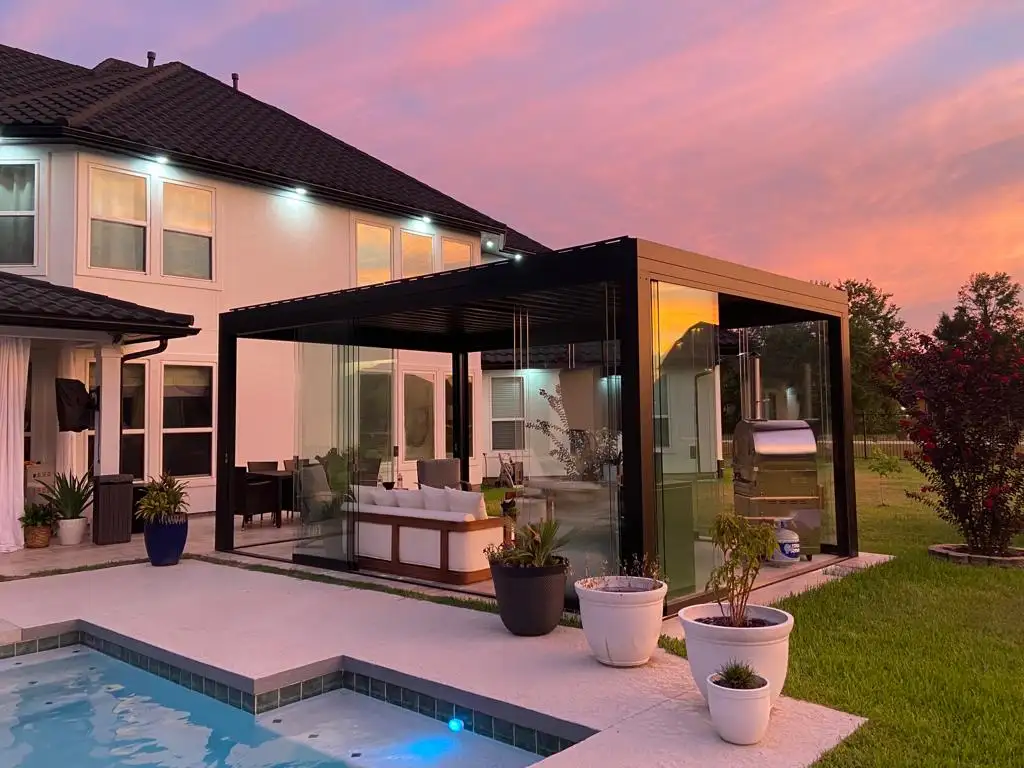
Motorized pergola roofs go way beyond simple shade solutions these days. They actually blend into the architecture so well that real estate experts say they can boost home values around 10% according to the National Association of Realtors report from 2023. Top brands are really stepping up their game with all sorts of custom framing choices these days. We're talking about stuff like powder coated aluminum frames or wood treated to withstand weather changes, which makes them work great for different house styles whether it's that Mid Century look, Mediterranean vibe, or something more industrial. The louvers themselves aren't one size fits all either. Contractors can adjust their angles to match whatever slope the roof already has. And those support posts? They take on whatever finish matches the outside of the house, whether it's brick, stone, or whatever material was used originally.
Color finishes, integrated lighting, heating, and fan options
Premium finishes like matte black, brushed bronze, and custom RAL colors transform pergola roofs into design statements. Integrated systems elevate outdoor spaces with:
- Hidden LED lighting strips (2700K–4000K color temperature adjustability)
- Radiant heating elements producing 25W/sq.ft heat output
- Low-profile ceiling fans with 6,000 CFM airflow capacity
- Motorized privacy screens with 98% UV-block capability
The 2023 Outdoor Living Report found 72% of homeowners prioritize design-cohesive outdoor systems over standalone features.
Growing demand for high-end, livable outdoor spaces
According to property developers, nearly half (47%) of new luxury homes these days come with permanent outdoor structures that have climate-controlled areas inside them. That's way up from just 29% back in 2020. Motorized pergola roofs are really catching on because they adapt to different weather conditions, keeping about 90% of their usefulness throughout all four seasons. The top builders say around two thirds (68%) of high end home sales actually depend on those outdoor living features that blend seamlessly with indoor spaces. These extensions work especially well in regions with mild climates where people want to enjoy their surroundings year round without sacrificing comfort.
ALL-SEASON USABILITY AND WEATHER PROTECTION FEATURES
Modern pergola roof systems transform outdoor spaces into year-round sanctuaries through military-grade weather-resistant construction. These structures employ aluminum alloys with powder-coated finishes that withstand temperatures from -40°F to 120°F (-40°C to 49°C) while resisting salt spray corrosion−a critical feature for coastal properties.
Dual zoned climate control systems bring together recessed infrared heaters capable of delivering up to 5 kW power with misting nozzles that can slash outside temperatures by around 20 degrees Fahrenheit or about 11 Celsius within just over a minute. Newer versions come equipped with components rated at IP56 standards, meaning they keep working even when faced with heavy downpours reaching two inches per hour and strong gusts blowing at speeds approaching seventy five miles per hour. For people living in tough climates such as those found in Arizona or Minnesota, these systems make all the difference. According to tests done by NSF International, homeowners report being able to spend time outdoors on their patios approximately eighty seven percent more days throughout the year than what's typical for regular pergola setups.
Frequently Asked Questions
What is a motorized pergola?
A motorized pergola has a roof with adjustable louvers that can be controlled through a motor, allowing users to manage sunlight and airflow with ease.
How do smart pergolas differ from traditional pergolas?
Smart pergolas integrate modern technology like IoT and sensors, allowing automated adjustments based on real-time weather conditions, whereas traditional pergolas are static and manual.
Can motorized pergolas withstand harsh weather?
Yes, modern motorized pergolas are constructed with durable materials like aluminum alloys and are designed to withstand extreme weather conditions, including high winds and heavy rain.
Do smart pergolas improve energy efficiency?
Yes, they strategically manage sunlight and airflow, reducing the need for air conditioning and cutting cooling costs by up to 24% in some cases.
Are smart pergolas compatible with home automation systems?
Yes, they are often compatible with systems like Alexa or Google Home, allowing users to control them via voice or smartphone apps.
Table of Contents
- From Traditional to Smart: The Evolution of Pergola Roof Systems
- Precision Control and Adjustable Louver Technology in Pergola Roof Systems
- Smart Technology Integration with Motorized Pergola Roof Systems
- Aesthetic Design and Architectural Enhancement for Luxury Outdoor Living
- ALL-SEASON USABILITY AND WEATHER PROTECTION FEATURES
- Frequently Asked Questions